Documenting Hong Kong In A Prompted Universe
Weaves together lived memories and the boundless possibilities of AI to reimagine and explore the layered histories of Hong Kong and the Kowloon Walled City.
-
![The Heterotopia]()
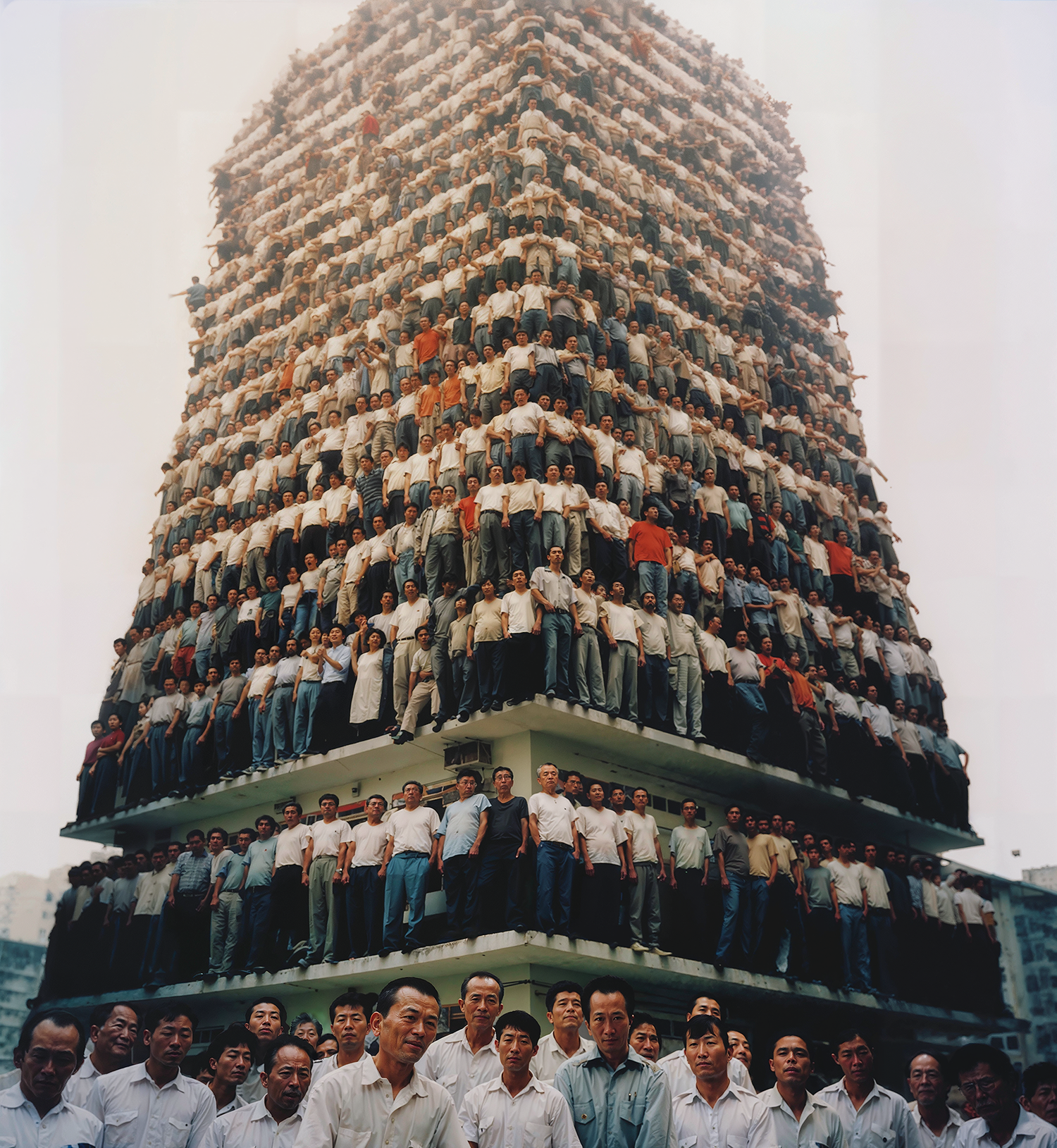
By 1950, Kowloon Walled City had swollen to around 17,000 residents; by 1990, more than 50,000 people were compressed into an area no larger than two rugby fields. Many were pushed there by bankruptcy, poverty, or the threat of deportation, while others were pulled in by cheap rents and the freedom created by minimal law enforcement and regulation, which encouraged informal clinics, workshops, and other shadow-economy enterprises. This dense labyrinth of stacked buildings and improvised alleyways produced a nomadic and transient social fabric, as people continually arrived and departed, generating a fluid, ever-shifting community that both depended on and defied the city’s lawless reputation.
-
![Concrete Organism]()
An urban symphony, where structures evolve like living organisms, where every brick tells a story. The Kowloon Walled City stood as an architectural marvel devoid of formal architects. The lack of a planned layout and a formal urban grid resulted in a non-linear and interconnected arrangement. Emerging as a labyrinth of concrete and steel, its towering structures were a result of spontaneous construction, with each building layering upon the next, gradually shaping a mesmerizing cityscape over time.
-
![Breathing Space]()
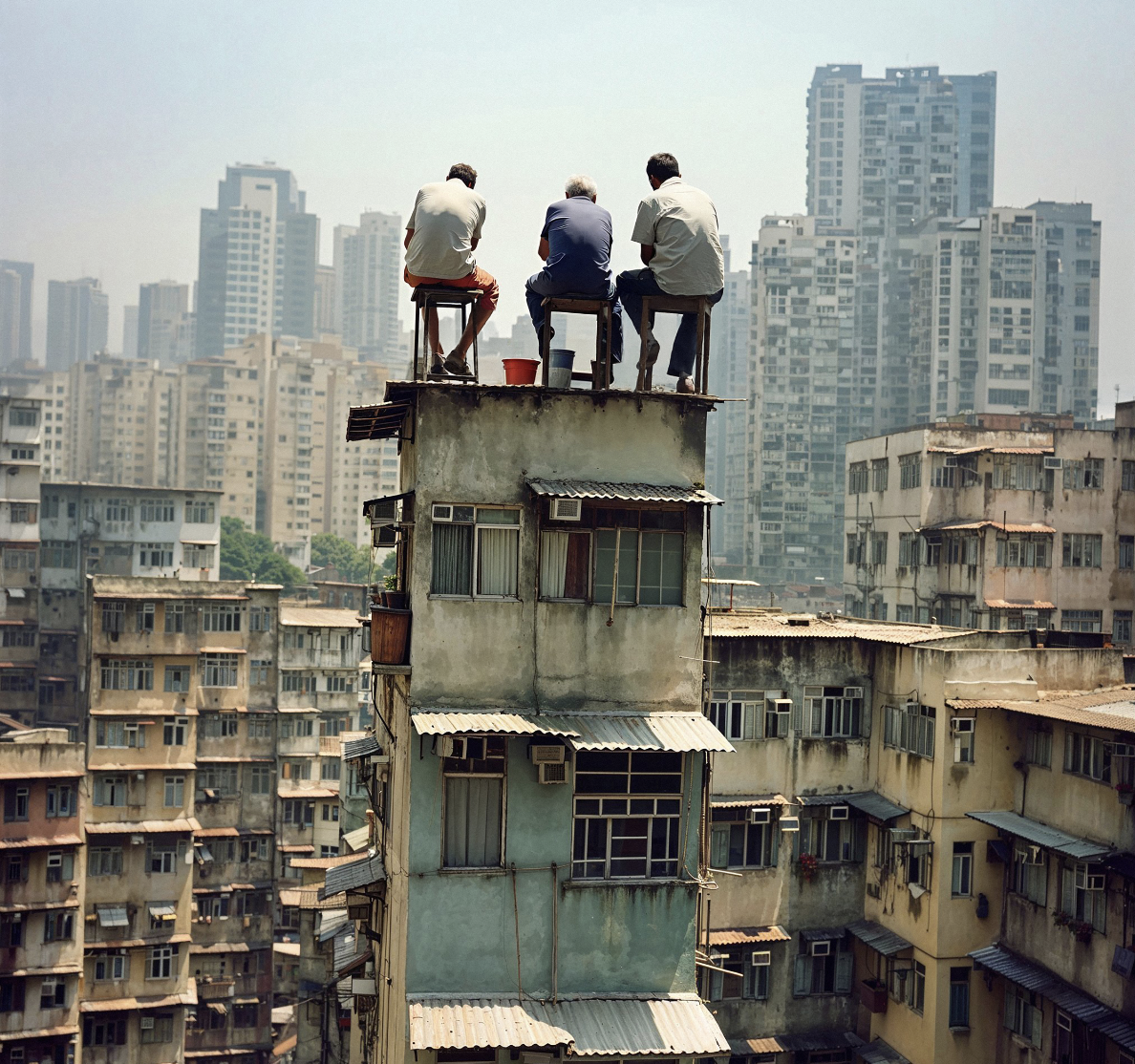
Kowloon Walled City was once the most densely populated place on Earth, housing around 50,000 people within just 0.026 square kilometres of land. In this compressed world, cage homes offered only the smallest fragments of personal space: cramped metal enclosures stacked one atop another, where privacy was scarce and everyday life unfolded in close quarters. In the Walled City and the later emergence of cage and “coffin” homes trace a stark lineage of tight spaces and tough lives, revealing how scarcity and inequality get built into the city’s very architecture. Looking back, there is both progress and hardship: the physical walls of the Walled City are gone, yet its shadows linger in today’s subdivided units, shaping a unique story of survival, resilience, and compromise in one of the world’s most intensely urbanised cities.
-
![Nested]()
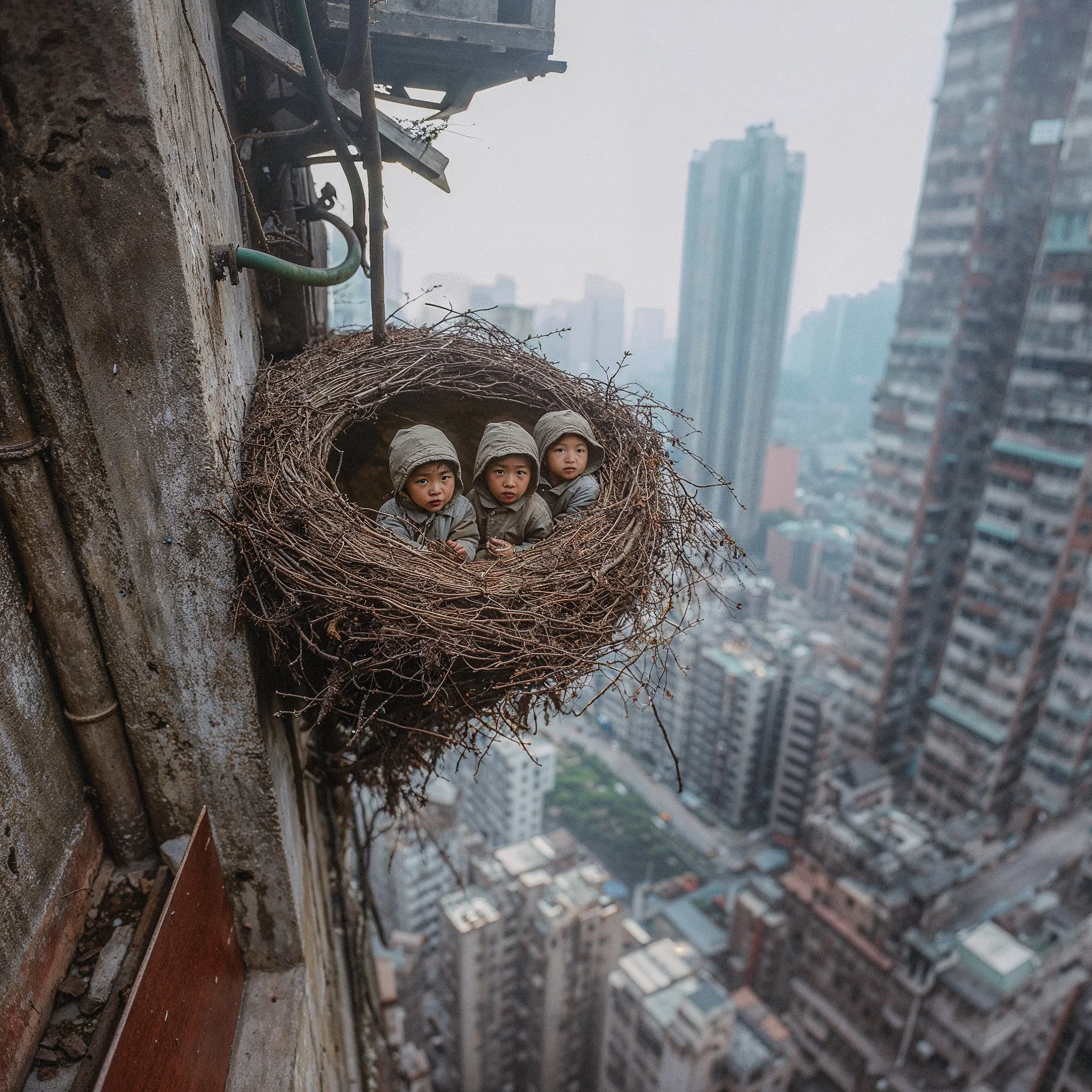
This work reflects on Hong Kong as a place of repeated departures, returns, and suspended in‑between states. Each generation has faced its own waves of uncertainty—war, political handovers, social unrest, economic pressures—that quietly push people to relocate, reimagine home, or live with packed suitcases in their minds. At its core, the piece asks what it means to grow up in a city where migration is not a single event but an ongoing condition, and how vulnerability, care, and resilience are passed down like an inheritance in the face of constant precarity.
-
![Rooftop Children]()
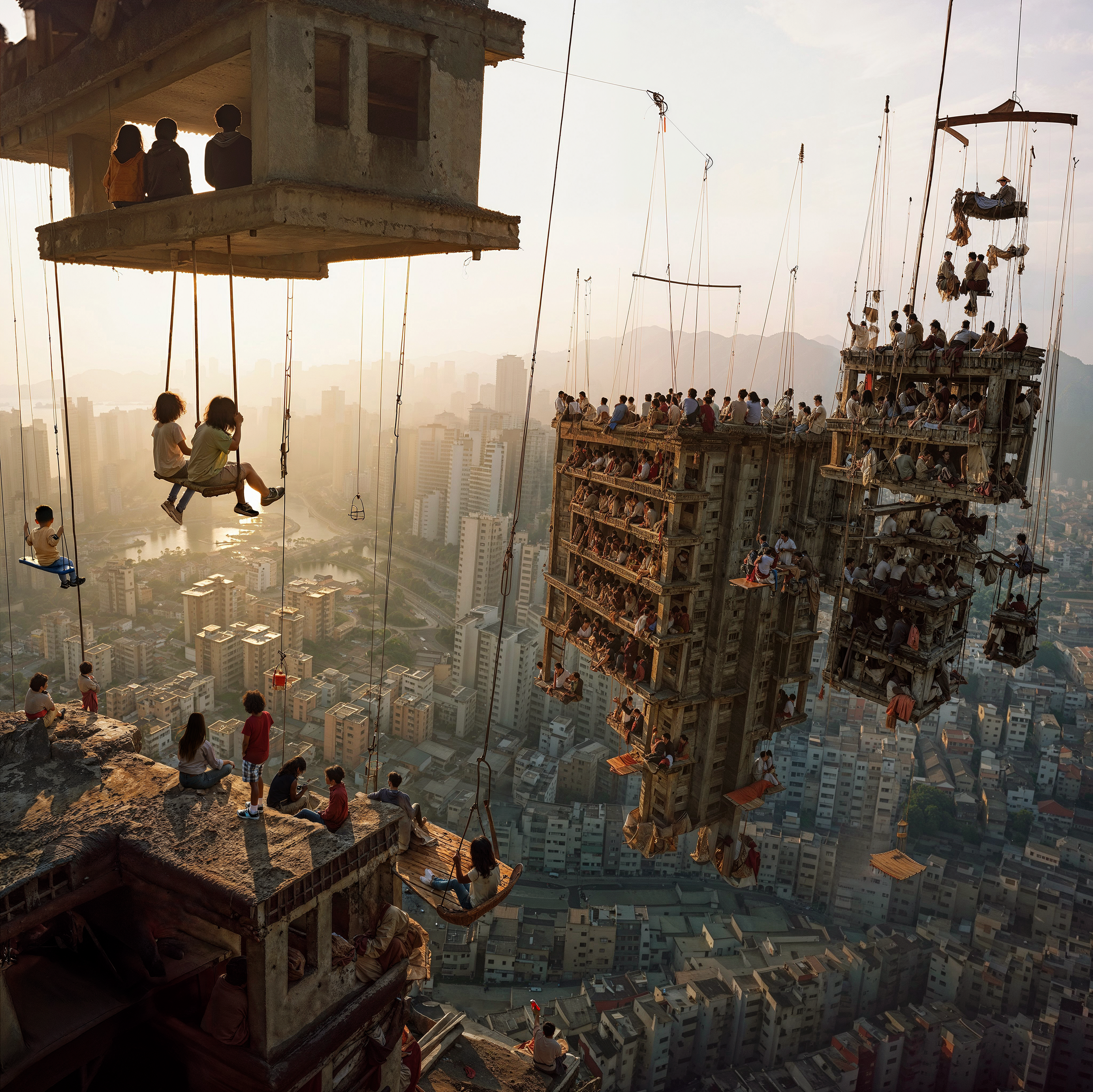
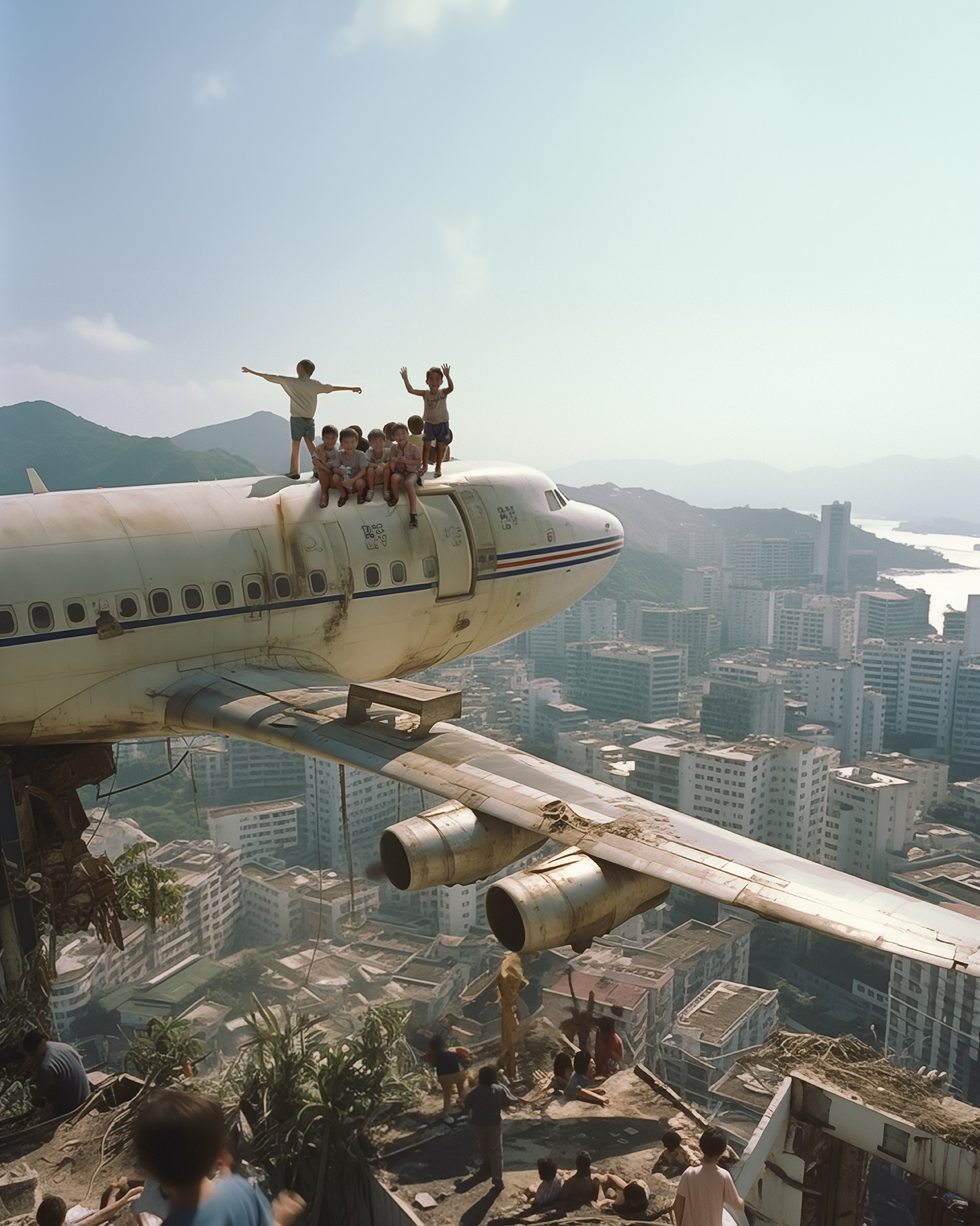
“If we can touch the plane, we can touch the sky” imagines the children of Kowloon Walled City claiming a horizon that was never meant for them. Growing up amid density, poverty, and social stigma, rooftop play became a quiet act of resistance: a way to turn limited space into boundless territory, and danger into exhilaration. This work channels that spirit of makeshift freedom, suggesting that aspiration does not wait for ideal conditions—it takes root wherever courage and imagination meet. Here, resilience is not heroic in a grand sense but everyday and intimate: children refusing to be defined by the walls around them, measuring distance not in metres, but in how close their fingertips come to the sky.
-
![Pong Lai]()
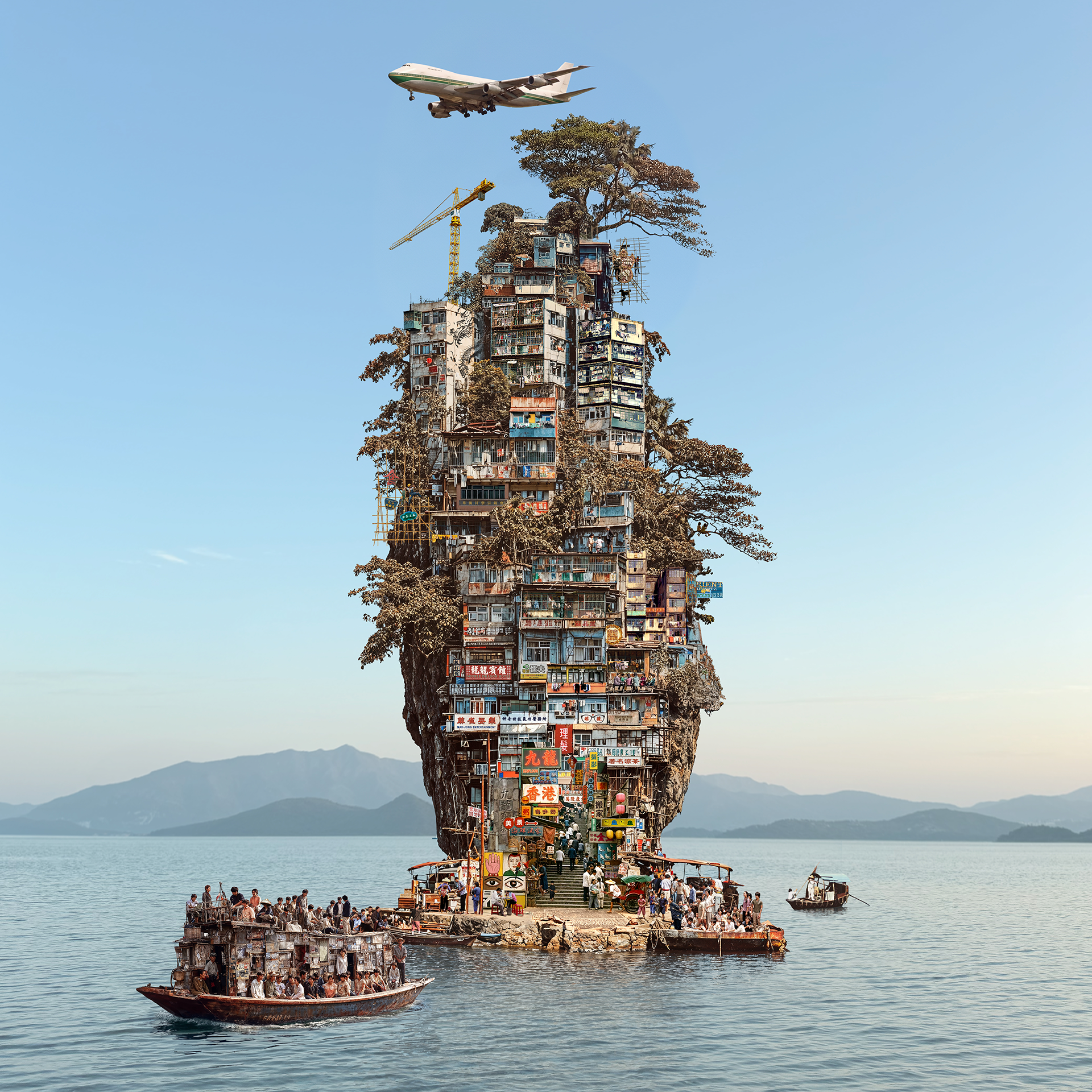
Descriptioa mythological paradise meant to be unreachable. Yet, this artwork presents a different kind of paradise: one that is desperately, violently, and beautifully constructed by mortal hands against the tides of history. This island is not geologically formed; it is anthropologically accumulated. It traces the waves of refugees who arrived to build this island, stacking their lives precariously in search of sanctuary. It is a vertical timeline of a city built on the transient promises of a "dream home”. It is a temporary paradise constructed against a ticking clock, proving our future is forever held up by the dense layers of our past.n goes here